Begin with a clear request
A purchasing process works best when the initial requirement is specific. What item is needed, how much is required, where will it be used and when must it arrive? Agreeing these details early helps the next person review the request without reconstructing the context.
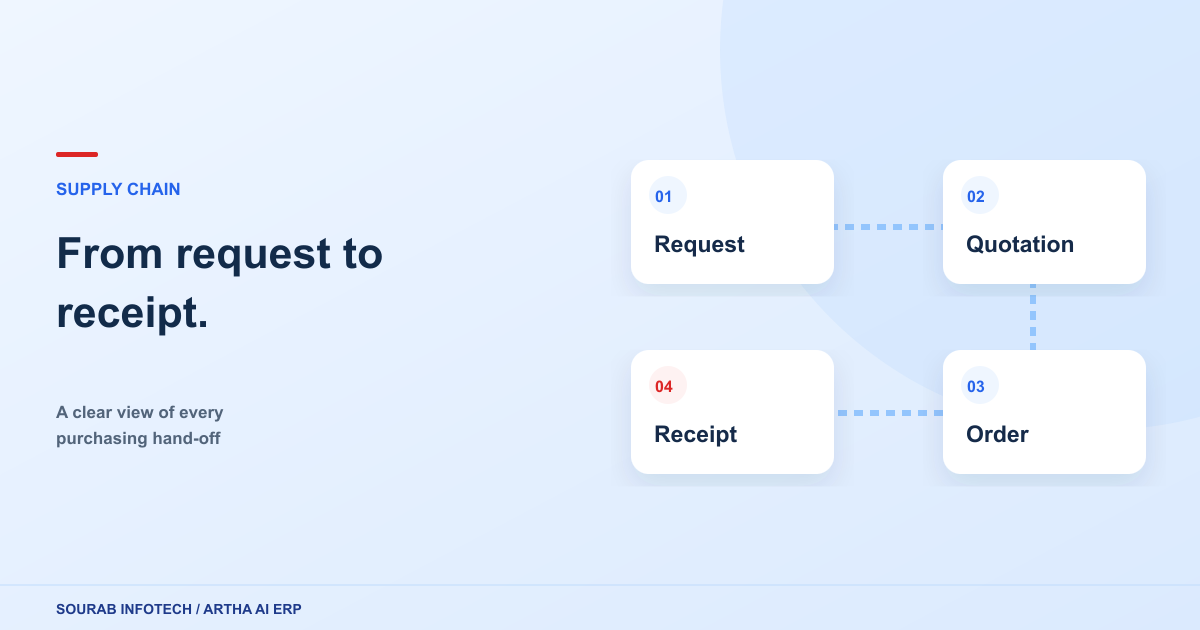
Artha AI ERP includes purchase requisition, quotation, order and goods-receipt workspaces. Treat the hand-offs between these steps as part of your implementation design. A form alone cannot resolve unclear responsibility or inconsistent item naming.
Review quotations before committing
Supplier quotations give buyers a place to compare commercial details before raising an order. Price matters, but so do quantity, delivery timing and the terms your organization needs to review. Make sure the selected supplier and item records are current.
When preparing a purchase order, check that the quantities, agreed rates and delivery expectations reflect the approved requirement. Use your configured approval process and confirm who owns the next step.
Record what actually arrives
The goods-receipt stage is where planned quantities meet physical stock. Stores teams should inspect the delivery and record the relevant receipt information. If an order arrives in parts, the team needs a clear way to distinguish what was ordered from what has been received.
Stock movement and stock-in-hand reporting provide additional context for warehouse reviews. Finance can then investigate related invoice records with a better understanding of the operational transaction.
Test exceptions as well as the normal path
A useful demonstration should include more than a perfectly completed order. Bring examples of the exceptions your teams handle most often and check how each is represented.
- A request that needs correction before approval.
- A supplier quotation with different delivery terms.
- A partial or damaged delivery.
- A purchase return and its supporting records.
- The report each team uses to find outstanding work.